


Massive Cocaine Seizure Exposes Freetown's Maritime Security Vulnerabilities

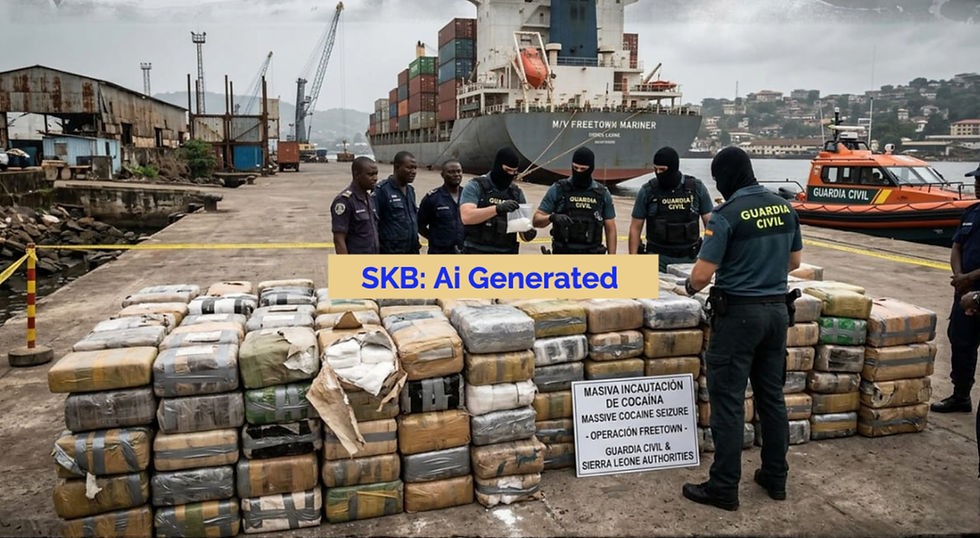
The recent interdiction of approximately 40 tonnes of cocaine by Spain’s Guardia Civil represents a significant escalation in Atlantic maritime trafficking. This operation has focused international attention on West Africa, specifically highlighting Freetown’s logistical role within global illicit supply chains.
The vessel, intercepted near Dakhla, departed from Freetown on April 22. The unprecedented scale of the seizure has necessitated a rigorous examination of maritime activities originating from Sierra Leone’s capital, as authorities seek to identify systemic vulnerabilities.
Although definitive evidence of domestic complicity remains pending, the vessel's departure point underscores critical weaknesses in port infrastructure and oversight, illustrating the risk of the region being utilized as a high-volume transit corridor.
The primary concern for regional stability is not isolated to this specific event but rather the broader systemic exposure to organized criminal networks.
Freetown’s geographical positioning provides significant logistical advantages for criminal syndicates seeking to exploit less-monitored maritime routes into European markets. Failure to implement robust counter-trafficking measures threatens to compromise national security frameworks and diminish Sierra Leone’s standing within the international community.
Security experts characterize this incident as a critical indicator of emerging threats. They emphasize that even in the absence of local sourcing, the implications of serving as a transit hub are profound, affecting both immediate security protocols and long-term socioeconomic stability.
Current events necessitate a comprehensive review of cargo inspection protocols, surveillance technologies, and inter-agency intelligence coordination. Strengthening maritime governance through legislative reform and international partnership is essential to mitigate these risks.
Beyond security, there is also a reputational dimension.
As Sierra Leone continues its trajectory toward economic reform and increased foreign investment, the association with transnational crime complicates its diplomatic narrative. Ensuring the integrity of trade routes is paramount to maintaining international investor confidence.
From a domestic perspective, the infiltration of such networks poses a direct threat to public safety.
Unchecked trafficking operations often lead to increased localized crime rates and the proliferation of illicit substances, further straining social services and law enforcement resources.
Following the arrest of 23 individuals of diverse nationalities, the vessel remains impounded in Las Palmas under the jurisdiction of the Spanish High Court as the multi-jurisdictional investigation proceeds.
The enduring significance of this event lies in the subsequent policy response from Sierra Leonean authorities.
The coming period will determine whether this serves as a catalyst for enhanced port security and maritime transparency or represents a missed opportunity to intercept the evolution of global narcotics networks.
Ultimately, while Freetown was not the intended terminus for the illicit cargo, its involvement in the logistical chain has firmly integrated the city into the global discourse on transnational security.



Comments