


Fatal Freetown Truck Accidents Demand Immediate Traffic Law Enforcement

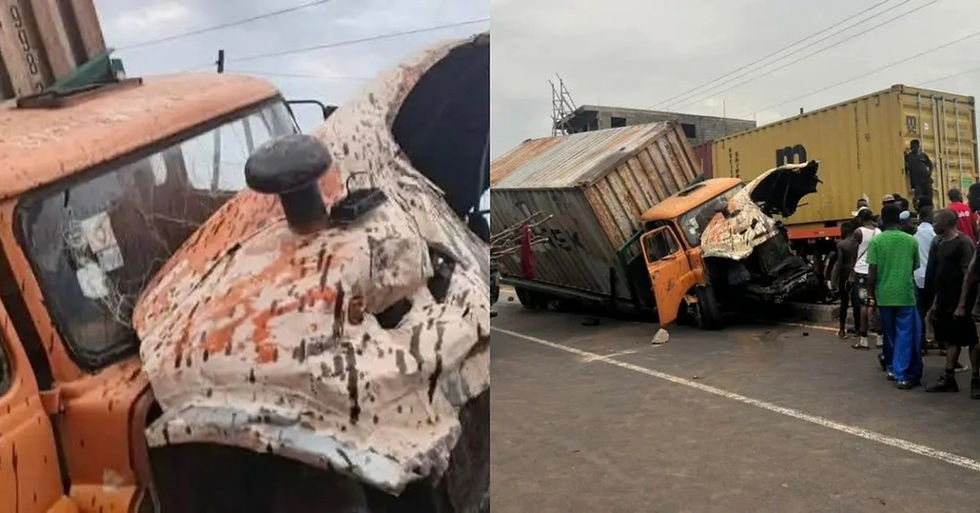
Public apprehension is escalating in Freetown due to a recurring incidence of fatal accidents involving heavy-duty container vehicles. Consequently, there is a substantial public mandate for rigorous enforcement of existing traffic statutes that govern the conveyance of such vehicles within urban limits.
Following the recent casualty event in Rokel, Sierra Leonean journalist Sonia Jaffal Ben Kaifala voiced serious reservations regarding the perceived inadequacy in enforcing restrictions designed to prohibit the movement of container trucks during peak daytime hours in congested Freetown sectors.
She asserted that despite established traffic control protocols implemented to mitigate congestion and elevate public safety, numerous 40-foot container vehicles persistently operate in open violation during the day, thereby subjecting commuters, pedestrians, vendors, and motorists to significant operational hazards.
Kaifala observed that principal roadways within the capital frequently exhibit traffic from overloaded and improperly maintained trucks, some of which are reportedly driven without due caution through high-density residential zones.
"The frequency of accidents involving these commercial carriers has reached a critical threshold in recent months," she stated, citing prior incidents, including the Lumley accident and the most recent incident at Rokel, where fatalities were reported after a container detached and impacted citizens and roadside businesses.
She emphasized that regulatory frameworks are already in place to govern the circulation of these heavy-duty vehicles; however, enforcement remains demonstrably deficient, permitting violations to occur routinely and overtly.
Furthermore, the continuous exposure to container truck incidents has generated significant public anxiety, with Kaifala noting a personal tendency to stop or park her vehicle defensively when these trucks approach.
Concurrently, other concerned citizens responding to the Rokel incident have raised parallel issues concerning the operational condition of many container-carrying vehicles in the city.
One observer proposed that a comprehensive resolution must extend beyond merely restricting movements to non-peak hours, advocating instead for mandatory quarterly vehicle inspections to guarantee adherence to roadworthiness standards.
The same individual maintained that a considerable portion of the active fleet is mechanically unfit for service and petitioned the Sierra Leone Road Safety Authority and the Police to stringently uphold all applicable transport safety legislation.
Conversely, another citizen expressed deep dissatisfaction with the government's protracted failure to institute permanent preventive measures against such lethal accidents, positing that substantive governmental action rarely follows public discontent, despite recurring tragedies.
The recent Rokel disaster has re-ignited a nationwide discourse on transport safety, prompting widespread calls for immediate governmental intervention to preclude further loss of life.
As the affected communities manage their losses, citizens are collectively urging governing bodies to prioritize paramount public safety imperatives over commercial operational convenience, demanding the complete and immediate implementation of all stipulated transport regulations.


Comments