


FBC Deputy Vice Chancellor Engages Deans on Curriculum and Policy Reforms

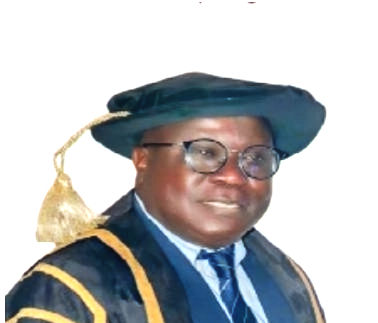
The Deputy Vice Chancellor of Fourah Bay College (FBC), Professor Andrew Baio, on Wednesday 18th March 2026, convened a high-level meeting with Deans of various faculties to lay the groundwork for an upcoming strategic retreat and address key operational and academic policy reforms.
The meeting, held at the DVC Conference Room, focused on harmonizing institutional procedures and reshaping academic programmes to better align with national development priorities. Professor Baio explained that the engagement forms part of a broader reform agenda since assuming office in October 2025.
“Since I assumed office in October 2025, I had my first meeting with the staff and senior management of FBC, informing them about my agenda,” he stated, noting that those early consultations revealed the need for standardized guidelines across key academic and administrative areas.
He highlighted concerns requiring urgent policy direction, including admission criteria for diploma and degree programmes, student promotion requirements, and the harmonization of student housing policies to ensure fairness, consistency, and effectiveness.
A major focus of the discussions was a directive from the Ministry of Technical and Higher Education calling for a review of academic offerings across tertiary institutions. Professor Baio said the college must introduce new programmes while also considering the consolidation or removal of modules that are not aligned with national needs and entrepreneurship development.
He stressed the importance of reviewing the entire education value chain, from curriculum design to delivery and assessment, in order to ensure relevance and impact.
The Deputy Vice Chancellor further called for a shift in teaching and assessment methods, moving away from rote learning toward problem-solving and scenario-based evaluation.
“Evaluation methods should focus on problem-solving approaches and scenario-based learning rather than urging students to memorise notebooks,” he emphasized.
He also advocated for stronger integration of practical skills, entrepreneurship, mentorship, and fieldwork into academic programmes, while calling for broad stakeholder engagement involving industry players, academics, and policymakers in curriculum development.
The meeting also served as a preparatory session for a strategic retreat scheduled to take place in Bo from 9th to 11th April 2026. During the discussions, Deans raised several proposals, including the revival of matriculation examinations for selected high-demand programmes such as Pure and Applied Sciences, Engineering, and Architecture.
In response, Professor Baio noted the importance of open consultation and flexibility in admission processes, adding that the retreat would provide a structured platform for in-depth deliberations on all key proposals.
He disclosed that the University Registry and the Tertiary Education Commission have been invited to participate in the retreat to ensure alignment with national standards and best practices within the University of Sierra Leone system.
The DVC also outlined plans to decentralize examination processes, aiming to strengthen efficiency and accountability across faculties. He explained that the retreat would focus on equipping faculties with the necessary human and technical capacity to manage examinations independently.
A key outcome of the reform process will be the introduction of a harmonized grading sheet and standardized spreadsheet system for the collation and analysis of student results. This, he said, will address challenges such as missing grades, incomplete records, and delays in capturing reference marks.
“All matters of grades should be addressed by faculties and not the exam office,” Professor Baio stated.
He concluded by tasking Deans to engage their respective faculties and prepare comprehensive departmental inputs ahead of the upcoming planning committee sessions for the retreat.


Comments