


High Court Clarifies Scope of Injunction

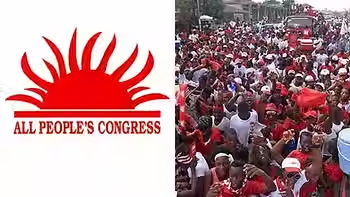
In a major legal decision, Justice Adrian Fisher of the Sierra Leone High Court has clarified the scope of an interim injunction targeting senior officials of the main opposition All People’s Congress (APC), affirming that the court order will not derail the party’s ongoing district-level elections or essential administrative operations.
The court's decision seeks to balance strict legal constraints with the practical realities of a major political party navigating crucial electoral preparations.
Issued earlier this month, the injunction restrains key executive members—including National Chairman Osman Foday Yansanneh and National Secretary General Lansana Dumbuya—from executing official duties, convening executive meetings, or directing day-to-day party affairs under the 2022 Constitution while the broader legal dispute remains unresolved.
However, Justice Fisher made clear during a review of the defendants' challenge that the injunction was never intended to paralyze the party.
While the order restricts affected officials from acting in their full capacity as party leaders, the court carved out targeted exceptions to preserve administrative continuity. Crucially, Yansanneh and Dumbuya are permitted to sign payment cheques for staff and contractors to ensure salaries and financial commitments are met without disruption. The ruling also grants limited operational latitude to facilitate the completion of district-level elections within their mandated 21-day timeline.
“Their role in signing cheques is permitted, but they cannot claim to be the National Chairman or Secretary General while doing so,” the judge clarified.
Justice Fisher nonetheless issued a stern warning to the affected officials, cautioning them against making public statements or taking actions that could misrepresent them as active party officeholders during this period.
Recognizing the risk of institutional paralysis, the judiciary sought to ensure routine party responsibilities continue unhindered.
The courtroom debate highlighted the deep internal rift facing the party. Plaintiffs led by Alfred Peter Conteh and Mohamed Sheridan Kamara argued that the executives' mandates have expired, rendering any continued exercise of authority unlawful. In defense, counsel Africanus Sesay argued that blanket restrictions during an active election cycle were disproportionate and severely disrupted party machinery.
Addressing these concerns, Justice Fisher noted that the APC's framework relies on interconnected bodies—such as the Internal Elections Management Committee and the National Secretariat—to oversee internal balloting and manage disputes. The court’s clarification aims to respect those internal structures while enforcing judicial oversight.
With substantive arguments scheduled to resume after the judicial recess on September 19, 2026, the ruling brings needed clarity to Sierra Leone’s political landscape, offering reassurance that internal legal disputes will not compromise grassroots democratic participation ahead of upcoming district elections.
As the party approaches crucial district elections, the ruling provides reassurance that the legal process will not derail the democratic process at the grassroots level.


Comments