


SLIE Legal Crisis: Engineers Demand Independent Interim Executive

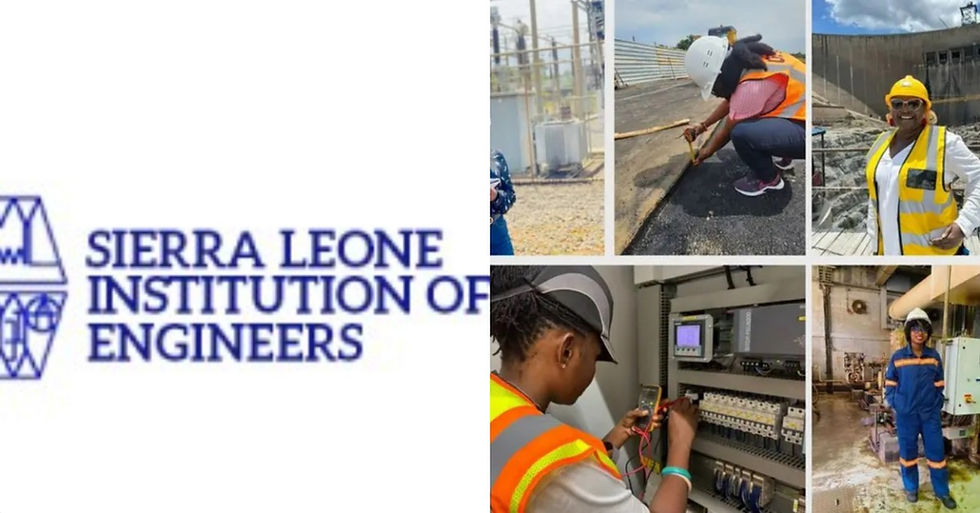
The governance and legal status of the Sierra Leone Institution of Engineers (SLIE) are facing scrutiny, prompting calls for urgent transitional reforms and independent oversight.
In a formal correspondence dated May 29, 2026, Ing. Saidu Conteh, a member of SLIE, characterized the situation as a serious institutional, legal, and professional crisis that jeopardizes the credibility of the engineering profession in Sierra Leone.
Concerned members have engaged in months of constructive engagement, including dialogue and mediation, facilitated by the Professional Engineering Regulatory Council (PERC). This engagement sought to enhance transparency and stabilize the institution, driven by member concerns regarding operational transparency, governance legitimacy, and SLIE’s constitutional foundation.
The dispute has intensified following recent revelations concerning the institution’s official registration status. Communication attributed to the National Investment Board (NIB) reportedly indicated a lack of prior registration records for SLIE, despite the institution’s claim of establishment in 1970 under the former Ministry of Works.
Subsequent documentation confirms that SLIE was formally incorporated as a private company limited by guarantee on May 15, 2026.
This change in legal status fundamentally alters the institutional landscape, prompting questions regarding the legal foundation of SLIE’s decades of prior operation, the validity of past governance structures, and the mandate used for the recent incorporation process.
Furthermore, ongoing governance tensions are perceived to undermine reform efforts. The correspondence notes a growing perception that resistance to transitional reform is driven by the incumbent leadership's desire to maintain existing offices and institutional control. Such conflicts of interest, the correspondence argues, hinder the necessary neutrality required for effective reform processes.
To address these concerns, the concerned engineers have formally requested the establishment of an independent interim transition executive, operating under the supervision of PERC.
This proposed mechanism is intended to serve as a neutral measure to restore institutional legitimacy, reduce internal tensions, and facilitate a transparent constitutional review.
The group also advocates for engagement with key regulatory and accountability bodies, including the National Investment Board, the Corporate Affairs Commission, and the Anti-Corruption Commission, along with the pursuit of potential legal remedies.
Ing. Conteh emphasized that this issue transcends internal disputes, directly impacting the future credibility, governance, and institutional integrity of the entire engineering profession in Sierra Leone.


Comments