


AGL’s $60M Port Expansion: Freetown's Trade Gateway Potential?

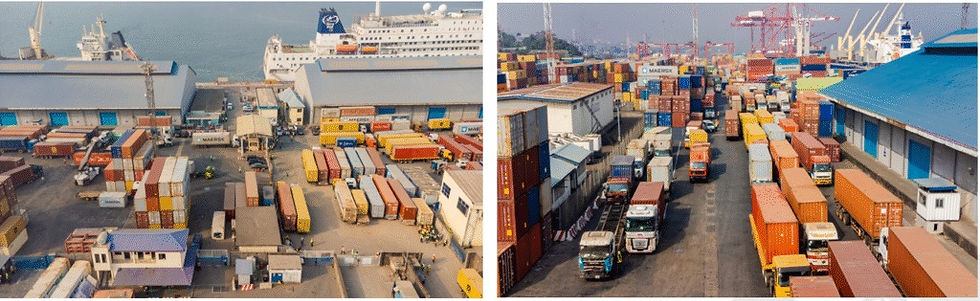
At the busy Queen Elizabeth II Quay in Freetown, giant cargo containers move slowly across ageing port infrastructure that has for years struggled under the pressure of growing trade demands, limited modernization, and mounting regional competition.
For decades, Sierra Leone’s main seaport has remained both a strategic national asset and a symbol of unrealized economic potential plagued by infrastructure gaps, operational inefficiencies, and recurring concerns over logistics capacity.
Now, Africa Global Logistics, commonly known as AGL, says it intends to change that narrative through a sweeping $60 million investment package aimed at transforming the Port of Freetown into a modern regional trade and logistics hub.
But beyond the headlines and investment figures, the ambitious announcement raises a deeper question increasingly being asked by economists, port observers, and ordinary Sierra Leoneans alike: Will this finally mark the beginning of sustainable maritime transformation for Sierra Leone — or simply another cycle of infrastructure promises without long-term structural impact?
Speaking during a media engagement at the Queen Elizabeth II Quay on May 25, AGL Regional Managing Director Fabjanko Kokan outlined an aggressive modernization agenda that includes major equipment upgrades, quay rehabilitation, renewable energy investment, expanded logistics capacity, and workforce development.
The investment comes at a critical moment for Sierra Leone’s economy, where policymakers have increasingly identified maritime trade and logistics as central to future economic diversification efforts.
Despite Sierra Leone’s strategic Atlantic coastline and proximity to major shipping routes, analysts say the Port of Freetown has historically operated below its full regional potential compared to larger and more technologically advanced West African ports in countries such as Ghana, Côte d’Ivoire, and Senegal.
Trade experts have long argued that inadequate port infrastructure, cargo handling limitations, congestion risks, and inconsistent modernization have weakened Sierra Leone’s competitiveness in regional maritime commerce. The latest AGL announcement appears designed to directly address some of those concerns.
According to the company, over $5 million worth of equipment has already been delivered and is currently being operated by Sierra Leonean personnel following technical training conducted by experts from Côte d’Ivoire.
Additional machinery worth more than $24 million has reportedly been ordered, including a ship-to-shore crane valued at $13.6 million, two rubber-tyred gantry cranes worth $6.5 million, electric terminal tractors, forklifts, reach stackers, and empty handlers.
The company also plans to invest approximately $25 million in the rehabilitation of quays 3 to 6 sections considered critical to operational safety and cargo efficiency at the port. Other infrastructure projects include a new power plant upgrade, solar energy installation, administrative complex, documentation building, and paving works covering 13,000 square metres.
Combined, the projects amount to one of the largest recent private-sector logistics investments publicly announced in Sierra Leone. For Sierra Leone, the implications extend beyond port operations alone.
Economists note that efficient ports are often directly linked to national trade competitiveness, investment attraction, customs efficiency, and overall economic productivity. The Port of Freetown serves as a critical gateway for imports and exports tied to key sectors including mining, agriculture, construction, telecommunications, oil and gas, and manufacturing. Any major improvement in cargo handling efficiency or logistics turnaround time could significantly affect the cost of doing business in Sierra Leone.
However, infrastructure specialists caution that physical expansion alone may not fully resolve deeper systemic challenges affecting trade facilitation. Issues surrounding customs processes, regulatory coordination, energy reliability, maritime governance, and broader transport connectivity remain equally important if Sierra Leone hopes to compete regionally.
“There is no doubt the infrastructure investment is significant,” one maritime analyst noted. “But the true test will be operational efficiency, maintenance culture, transparency, and how these improvements integrate into wider national trade systems.”
Captain Kokan emphasized that over 99 percent of AGL’s workforce consists of Sierra Leoneans, while also highlighting efforts to improve female participation and technical capacity development within port operations. He further stated that Sierra Leoneans and the government collectively hold 20 percent shares in the company a detail likely intended to reinforce national participation in the project’s economic benefits.
“This port belongs to Sierra Leone,” Kokan declared.
“The people and the government hold 20 percent of the company’s shares, and we will continue to ensure that Sierra Leoneans reap maximum benefits from this investment.”
The company also announced parallel social investment initiatives, including the construction of a school in Northern Sierra Leone expected to increase enrolment capacity from 305 to 605 pupils, alongside scholarship support, food assistance, and agricultural programs.
Furthermore, economic and labor analysts contend that the enduring success of this capital injection hinges on the substantive integration of Sierra Leonean professionals across the organizational hierarchy—extending beyond frontline operations into senior management, technical oversight, procurement, and the broader maritime value chain.
This modernization initiative coincides with a period of intense regional activity, as several West African nations aggressively expand their port infrastructure to secure international shipping routes and establish themselves as premier logistics hubs.
Significant upgrades in Tema, Abidjan, Dakar, and Lomé have heightened regional competition for maritime dominance, compelling Sierra Leone to not only revitalize its physical assets but also to enhance operational efficiency, ensure policy consistency, and bolster investor confidence.
At the Queen Elizabeth II Quay, the juxtaposition of modern machinery and legacy infrastructure serves as a poignant reminder of the port's transition. For the local workforce, these developments represent more than mere trade metrics; they symbolize a pathway toward sustainable employment, national advancement, and the realization of Sierra Leone’s strategic maritime potential.
Ultimately, the discourse surrounding the Port of Freetown has shifted from a narrative of deficiency to one of immense potential, marking a pivotal moment in the country’s economic trajectory.


Comments